In the world of lighting, the debate between LED lights and halogen lamps is ongoing. Many consumers wonder why LED lights are better than halogen lamps. Here, we explore key reasons for this trend.
LED lights offer increased energy efficiency. They consume less power while providing the same brightness. This leads to lower electricity bills and reduced carbon footprints. In contrast, halogen lamps waste energy as heat. This not only costs more but also contributes to environmental concerns.
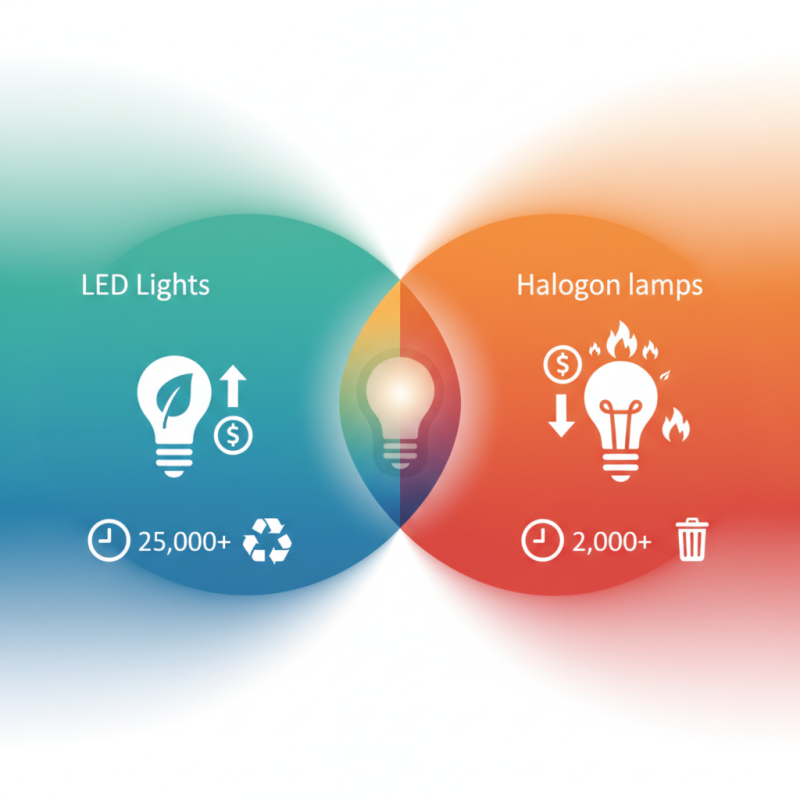
Moreover, LED lights have a longer lifespan, lasting up to 25,000 hours or more. Halogen lamps typically last only 2,000 hours. This difference means less frequent replacement and less waste. While some may feel attached to the warm glow of halogen, LED options also mimic that warmth effectively. Embracing LED lighting could significantly enhance your living or working space. However, individual preferences may require reflection and adjustment.
Comparison of Efficiency: LED Lights vs. Halogen Lamps
When comparing LED lights and halogen lamps, efficiency is a critical factor.
LED lights shine brighter while consuming significantly less energy. Halogen lamps waste much of their energy as heat.
In contrast, LEDs convert more energy into visible light. This efficiency can lead to substantial savings on electricity bills.
Moreover, the lifespan of these two types of lights differs greatly.
Halogen lamps typically last around 2,000 hours.
LEDs, on the other hand, can endure up to 25,000 hours or more. This longevity means fewer replacements and less waste.
However, some may find that LED lights can occasionally produce a harsh glare.
Finding the right brightness and color temperature is crucial in achieving optimal lighting.
Despite their advantages, LEDs can be pricier upfront. Budget-conscious shoppers might hesitate.
It is essential to weigh the long-term savings against initial costs. While halogen lamps may seem like a quick fix, investing in LEDs usually pays off over time.
The transition to LED lighting presents both challenges and opportunities for improvement in energy efficiency.
Lifespan Analysis: Longevity of LED Lights Compared to Halogen
When comparing the lifespan of LED lights and halogen lamps, the differences are stark.
LED lights can last up to 25,000 hours, while halogen lamps often burn out after just 2,000 hours.
This disparity means fewer replacements and lower long-term costs for LED users. The durability of LEDs translates to significant savings on both money and time.
LED technology also operates more efficiently. Less energy is wasted as heat, meaning that LEDs maintain their output longer. This efficiency helps reduce the frequency of bulb changes. However, not all LED lights are created equal. Some may not reach their advertised lifespans due to manufacturing defects. It's important to choose reputable sources.
Still, the rapid evolution of LED technology offers exciting opportunities. Newer models continue to improve, pushing durability further.
The initial investment may be higher than halogen, but the benefits quickly outweigh the costs.
Halogen lights can provide a warm glow, but they simply cannot compete with the longevity of LEDs.
Users must weigh their options and consider their individual needs.
Energy Consumption: How LEDs Save More Power than Halogen Lamps
LED lights have rapidly gained popularity as a more efficient lighting option compared to traditional halogen lamps. One of the main advantages of LED technology is its significant energy-saving potential. Compared to halogen lamps, LEDs consume up to 80% less energy. This reduction is not just a minor detail; it translates into substantial savings on electricity bills over time.
Moreover, LEDs provide longer lifespans, lasting up to 25,000 hours, while halogen bulbs typically last about 2,000 hours. Using LEDs means fewer replacements and reduced waste. This efficiency is especially important in residential and commercial settings, where lighting is a constant need.
Despite these benefits, the initial cost of LED lights can be higher than that of halogen options. This can deter some customers from making the switch. Nonetheless, the long-term savings and environmental benefits cannot be overlooked. Transitioning to LED often leads to a remarkable reduction in energy consumption, making it an investment worth considering.
Color Temperature and Brightness: Understanding LED and Halogen Options
When comparing color temperature and brightness, LED lights often win over halogen lamps. A report by the U.S. Department of Energy shows that LED lights offer a variety of color temperatures, from warm white (2700K) to cool daylight (6500K). This range allows users to find the perfect ambiance for any setting. In contrast, halogen lamps provide a limited spectrum, typically around 3000K, which may not suit every preference.
Brightness, measured in lumens, is another critical factor. LED lights produce much higher lumen output while consuming less energy. According to a study by the International Energy Agency, LEDs can achieve a brightness equivalent to a 100W halogen bulb while consuming only 14W of power. This efficiency appeals to homeowners seeking cost-effective solutions.
Despite these advantages, it is essential to consider dimming capabilities. Some LED options may not dim as smoothly as halogen lamps. Users often report a flickering or abrupt change in brightness when adjusting LED dimmers. This inconsistency can be a point of frustration. Future improvements in LED technology are anticipated to address these issues.
Environmental Impact: LEDs vs. Halogen Lamps in Sustainability
When considering the environmental impact, LED lights offer significant benefits compared to halogen lamps. According to the U.S. Department of Energy, LED lights use at least 75% less energy than traditional incandescent bulbs. Halogen lamps, although slightly more energy-efficient than incandescent, still consume considerable power and produce more heat. This inefficiency leads to higher greenhouse gas emissions when the electricity is generated from fossil fuels.
The lifespan of LED lights is another crucial factor. LEDs can last up to 25,000 hours, while halogen lamps typically last only around 2,000 hours. This extended lifespan reduces waste as fewer bulbs need to be produced and discarded. The International Energy Agency estimates that if all homes replaced traditional bulbs with LEDs, the reduction in carbon dioxide emissions would be equivalent to removing 47 million cars from the road annually.
However, the production of LED lights does raise some environmental concerns. The extraction of rare materials used in LEDs, like indium and gallium, can create ecological damage. There is an ongoing debate about the sustainability of these materials. As we advance, we must balance these trade-offs and continue to seek improvements in manufacturing processes. This reflection is vital for creating a more sustainable lighting future.
Why LED Lights Outshine Halogen Lamps for Your Needs? - Environmental Impact: LEDs vs. Halogen Lamps in Sustainability
| Criteria |
LED Lights |
Halogen Lamps |
| Energy Efficiency |
Up to 80% more efficient |
Less efficient, uses more power |
| Lifespan |
25,000 - 50,000 hours |
1,000 - 2,000 hours |
| Heat Emission |
Minimal |
High |
| Environmental Impact |
Eco-friendly, no toxic materials |
Contains halogen gases, not recyclable |
| Brightness (Lumens per Watt) |
80-100 lumens/watt |
16-24 lumens/watt |
FAQS
: LED lights shine brighter while consuming significantly less energy, leading to lower electricity bills.
LEDs can endure up to 25,000 hours, while halogen lamps last around 2,000 hours.
The initial cost of LED lights is higher, which can deter budget-conscious shoppers from switching.
LEDs produce less waste due to their long lifespan, yet the extraction of materials for LEDs raises concerns.
LEDs use 75% less energy than incandescent bulbs, reducing greenhouse gas emissions significantly.
Some users find LED lights can create a harsh glare, making it crucial to choose the right brightness.
Switching to LEDs leads to substantial energy savings and reduces the frequency of bulb replacements.
The extraction of rare materials for making LEDs can cause ecological damage, raising sustainability questions.
Halogen lamps are slightly more efficient than incandescent bulbs, yet still consume considerable power and produce heat.
The need for continuous improvement in manufacturing processes to address the environmental impacts of material extraction.
Conclusion
The comparison between LED lights and halogen lamps reveals several reasons why LED lights are better than halogen lamps. Firstly, LED lights boast superior efficiency, converting a higher percentage of energy into light, which significantly reduces energy consumption. This efficiency is complemented by an impressive lifespan; LEDs can last up to 25 times longer than halogen bulbs, making them a more sustainable choice in the long run.
Moreover, LED lights offer flexibility in color temperature and brightness, allowing users to customize their lighting experience according to their needs. In terms of environmental impact, LEDs are the clear winner, as they consume less energy and have a smaller carbon footprint compared to halogen lamps. Overall, the combination of efficiency, longevity, and reduced environmental harm underscores why LED lights are the preferred option for consumers seeking both performance and sustainability.

 Tverse LED light